

When you track and categorize your overhead, you can plan around expenses, get an accurate picture of your profit margin, and find new ways to save your business money. Overhead is a summary of the costs you pay to keep your company running, and appears on your monthly income statement. These Overhead expenses are usually incurred on a new product or process development. They are not identifiable to be charged on any specific product or service line catered by the business. Such Overhead expenses are the ones that vary in direct proportion to the output volume.
How to calculate overhead costs
Maybe your software costs have crept up, or new staff haven’t brought in as much business as expected. Picking up on trends like this makes it easier to make positive, proactive decisions for your business. You need them for your business to function, but they don’t directly generate income. ProjectManager is award-winning work and project management software that connects teams with collaboration tools and a single source of truth. With features for task and resource management, workload and timesheets, our flexible software can meet the needs of myriad industries.
Overhead Costs: Meaning, Types, and Examples
- However, in special circumstances where equity so dictates, additional costs may be allowed to the extent agreed upon before costs are incurred.
- A business may incur such costs at any time, even though the exact cost will fluctuate depending on the business activity level.
- With less than 10% overhead (a rare feat in the nonprofit world), these charities spend 90% or more of the money you donate on actual goods and services that support their missions.
- In the given example, the direct costs for material overheads are derived from the total value of purchased and processed materials.
- For instance, commissions paid may remain the same up to 1,000 units but might go up for every 500 units after that.
Knowing how to accurately track and manage overhead costs can help save your business thousands of dollars every year. By keeping control of your overhead costs before they get out of line, your business will be better positioned for growth and sustainability, even when sales patterns fluctuate. In the given example, the direct costs for material overheads are derived from the total value of purchased and processed materials.
205-18 Independent research and development and bid and proposal costs.
Accurate pricing is the lifeblood of any manufacturing business, ensuring profitability and competitiveness. Manufacturing overhead, the indirect costs incurred during production, plays a crucial role in determining the true cost of overhead cost examples goods manufactured. Understand how to calculate these indirect costs precisely to unlock the key to effective pricing strategies and maximize your bottom line. Variable overhead spending variance measures the difference between actual variable overhead costs and the budgeted amount based on standard rates.

For product stocking, the working hours required by employees are decisive. According to our project experience, the overhead costs of most companies in the retail/consumer goods sector are around 12-15% of turnover and therefore harbor numerous cost-cutting potentials. The active exploitation of those can hence have a significant positive impact on the overall operating results. This type of overhead relates to expenses for social facilities and services within the company, such as company canteens, company doctors or leisure activities for employees. They include salaries for administrative staff, office Bookkeeper360 Review supplies, depreciation on administrative buildings, rent and other costs for maintaining the administrative infrastructure.
- Applying the classification inconsistently can create confusion and potential legal issues.
- This approach ensures a common understanding of the project – not solely to increase the company´s efficiency, but also to create a baseline for sustainable cost control.
- That way, you keep accurate business records, produce accurate financial statements, and see where your money is going.
- Knowing the breakdown and trends of overhead costs empowers businesses to make informed decisions.
- Some benefits are fully taxable, meaning the value of the benefit is included in the employee’s gross income and subject to income tax and payroll taxes.
Overhead https://www.vipnet-consulting.ro/2023/05/12/equity-multiplier-guide-examples-financial/ is often seen as a necessary burden, but in truth, it represents one of the most controllable areas of business finance. By taking a systematic approach to categorization, tracking, analysis, and reduction, companies of all sizes can convert overhead from a passive expense into a strategic advantage. The goal is to use savings to fuel growth rather than sit on idle capital. Efficient overhead management creates room to experiment and innovate, giving businesses a competitive edge. A culture of cost-awareness ensures that overhead is kept in check without sacrificing productivity or morale.
Calculating overhead costs
- Perks can range from variable costs like performance-based bonuses to fixed costs like holiday parties or special events.
- Actuarial valuation means the determination, as of a specified date, of the normal cost, actuarial accrued liability, actuarial value of the assets of a pension plan, and other relevant values for the pension plan.
- Accounting for approximately 12-15% of turnover, overheads are a crucial cost block that can be developed into a competitive advantage through active management.
- Instead, they support the overall revenue-generating activities of the business.
- In this Insight, you will learn about overhead costs and how to optimize them in a comprehensive and pragmatic way.
- Admin staff, finance officers, HR teams and directors working on business operations are usually included in your overheads.
- The key is to ensure that outsourcing partners offer quality services and integrate seamlessly with internal operations.
When we’re donating to a charity, most of us want to know our hard-earned dollars are being used effectively. While there are no hard and fast rules about how overhead costs are categorized, here are some examples of overhead costs and where you might find them on a business expense report. Examples of overheads vary from business to business, but there are some classic categories most companies will encounter. These include costs such as premises (literally keeping the roof overhead), utilities, software, insurance and marketing. What separates them is whether the cost is tied directly to delivering your product or service. Insurance is often a necessary expense, but because it is also not directly related to the production of goods or services, it’s considered an overhead cost.
The Role of Industry Benchmarks in Overhead Management
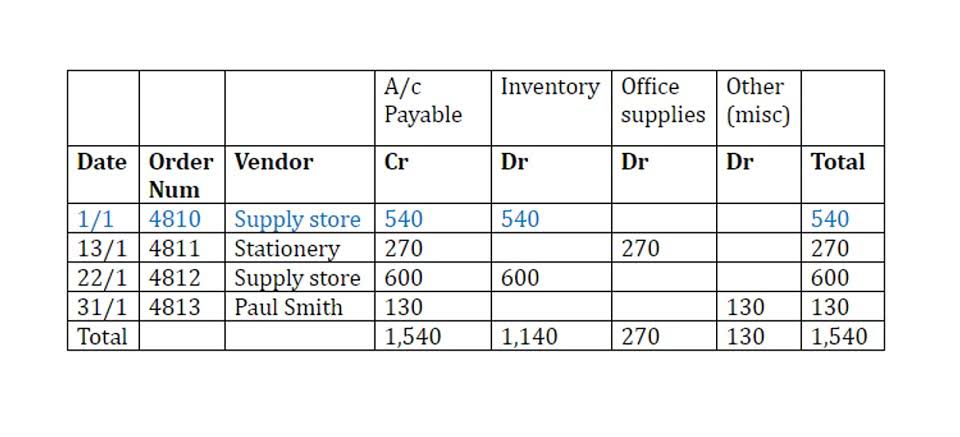
Although insurance costs aren’t directly related to profit generation, they may be a legal requirement for business operations. Even if they aren’t required by law, it’s a good idea to purchase the appropriate insurance so your company is covered in the event of damage or liability. Rent is a fixed overhead cost, meaning you’ll pay the same amount every month. Many administrative costs, like office salaries, are fixed costs and therefore predictable. Others, like replacing broken furniture or office equipment are variable and may come as a surprise.